ICD-10 coding
Following the recent release of SNOMED coding in Heidi, a phased rollout of ICD-10 coding is underway.
Participating users can enable ICD-10-CM coding via Memory. This is suitable for US-based clinicians.
Section Name: BlockImage
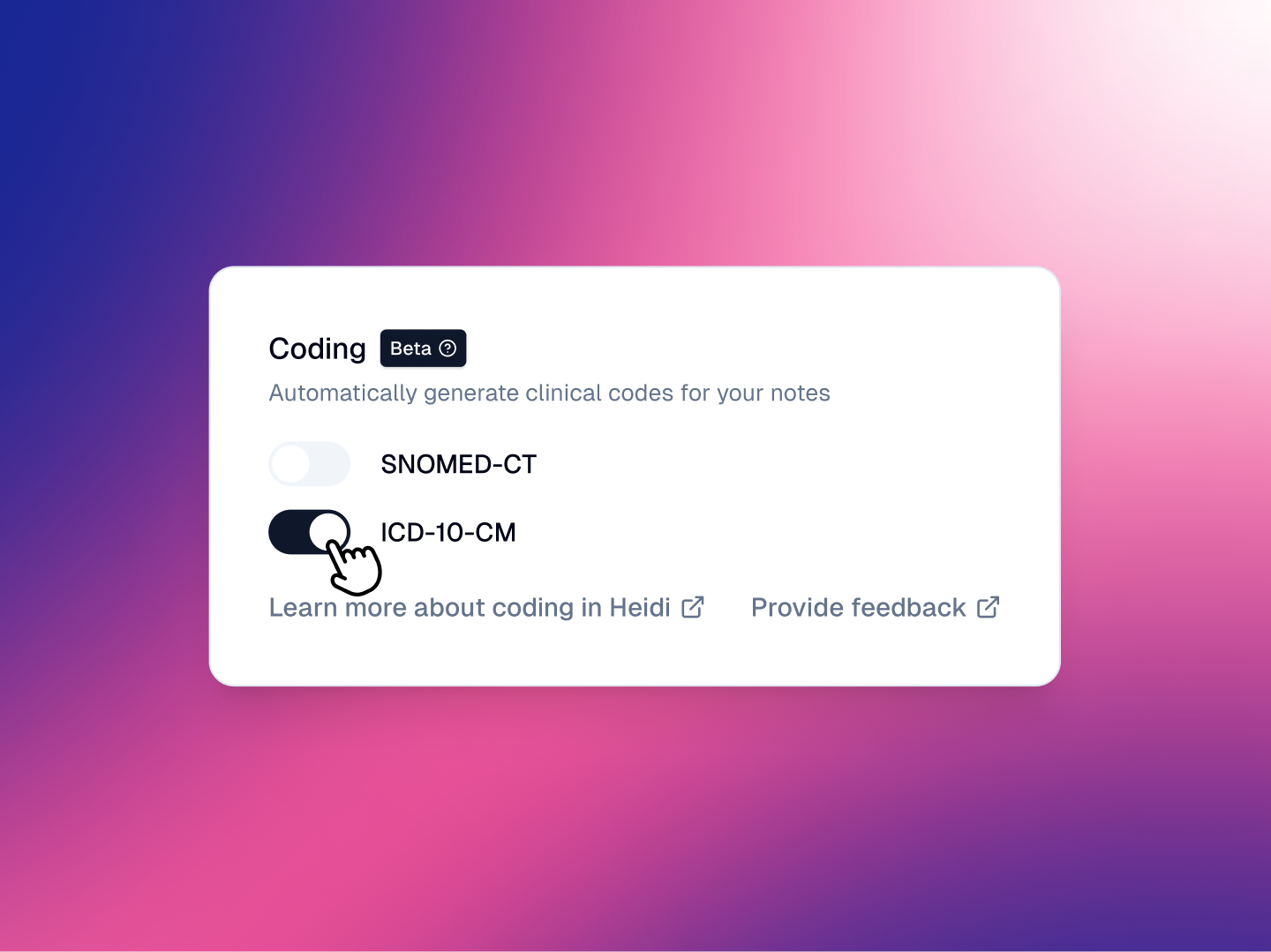
Once enabled, Heidi presents a list of suggested ICD-10 codes after processing each clinical encounter.
Section Name: BlockImage
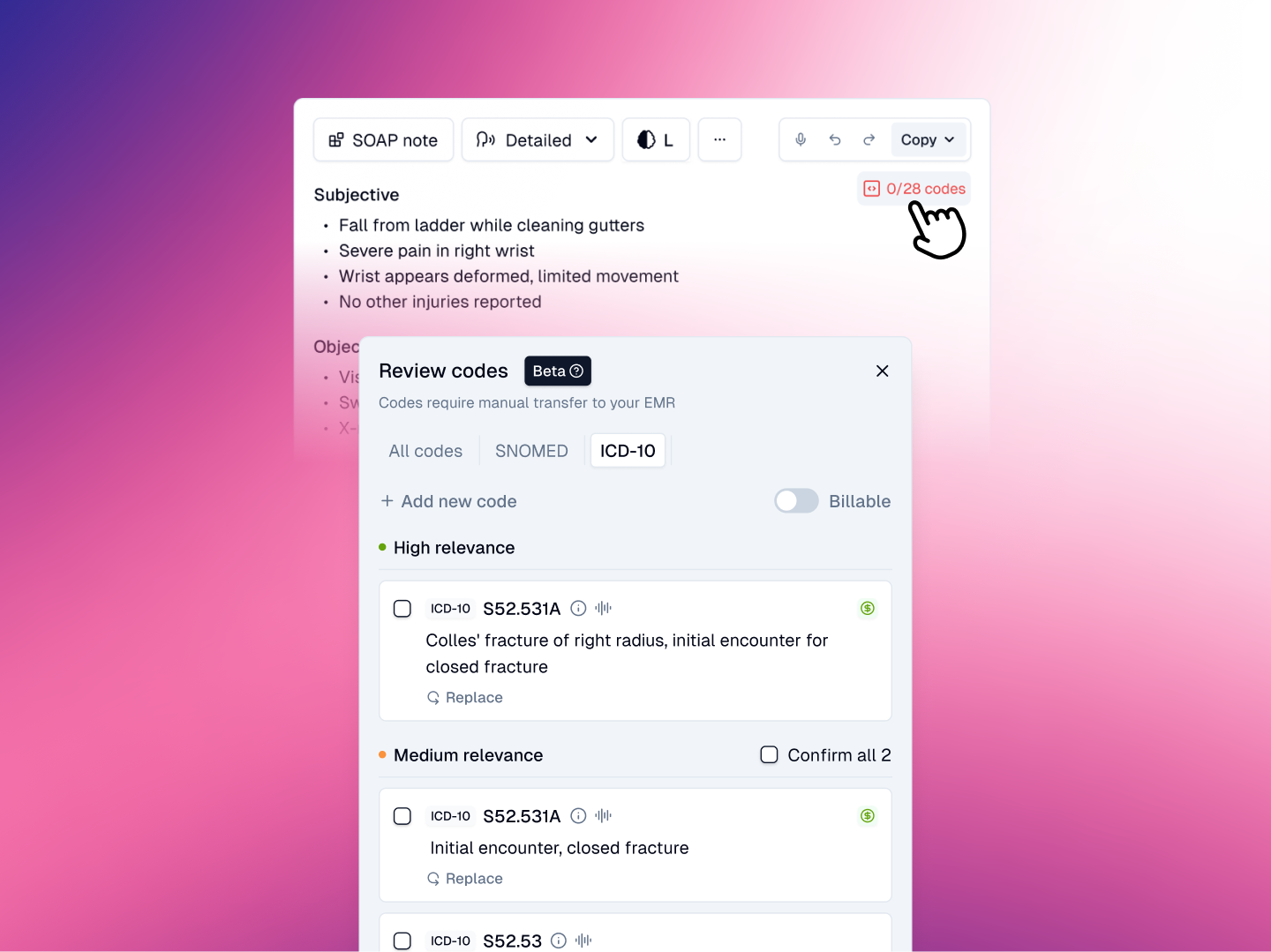
Upon viewing the list of suggested codes, clinicians can:
- Confirm an individual code by checking a box
- View Code specification by selecting the info icon
- Review evidence from the transcript supporting each code (waveform icon)
- Replace a code by searching for a suitable alternative
- Remove individual codes from the list
Section Name: BlockImage
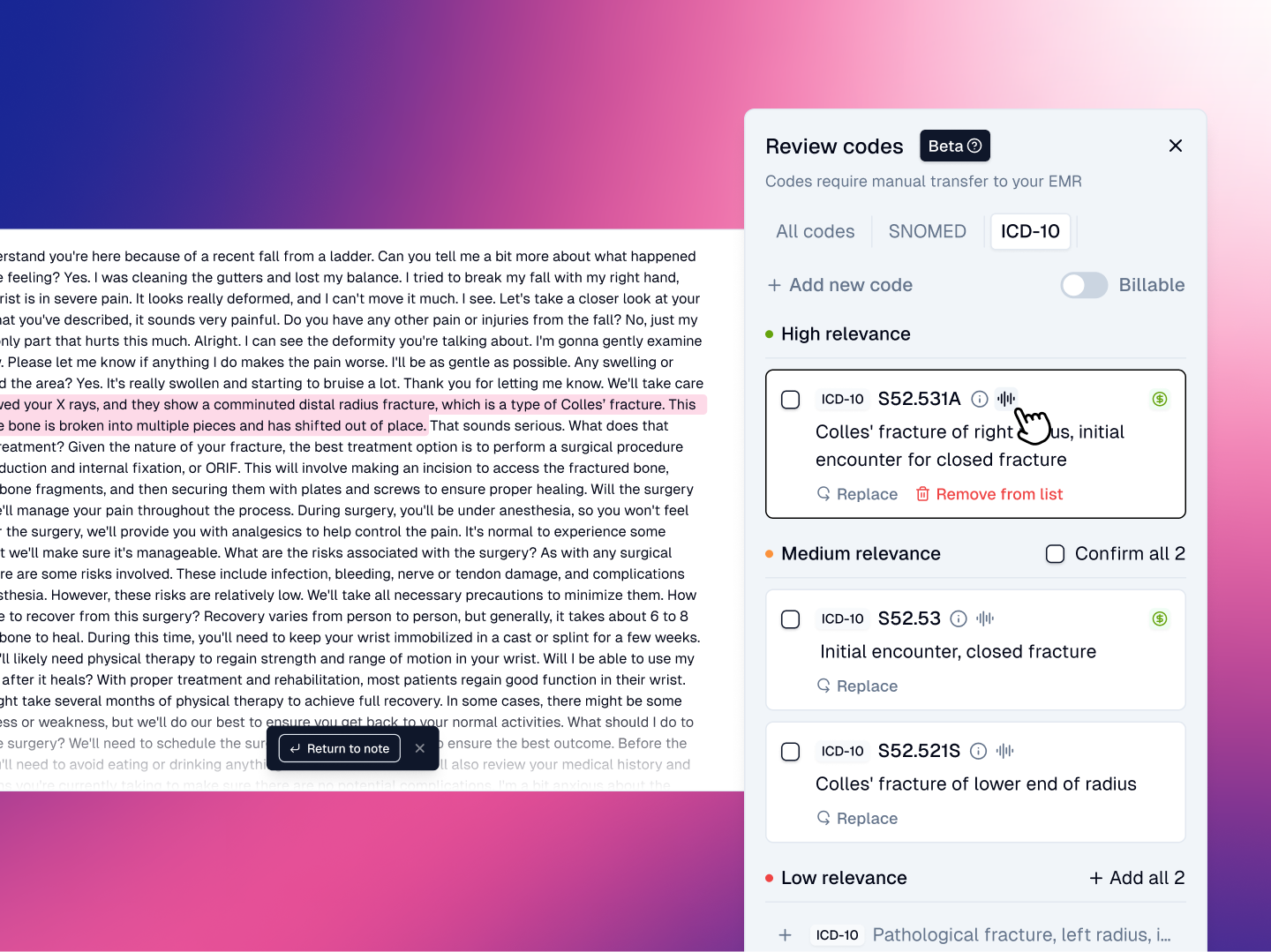
ICD-10-CM codes will display a billable badge to qualifying codes - this can be toggled on or off.
New codes can be added from the sidebar, with code set filter options for clinicians utilizing both SNOMED and ICD-10 codes
Please note: Clinicians are responsible for manually reviewing all suggested codes to ensure they accurately reflect the patient encounter.
ICD-10 coding is currently in limited beta release. If you do not already have access and would like to enroll, please reach out to us.
Detailed instructions on coding are available in the Help Centre.
Enhanced handwriting and PDF recognition
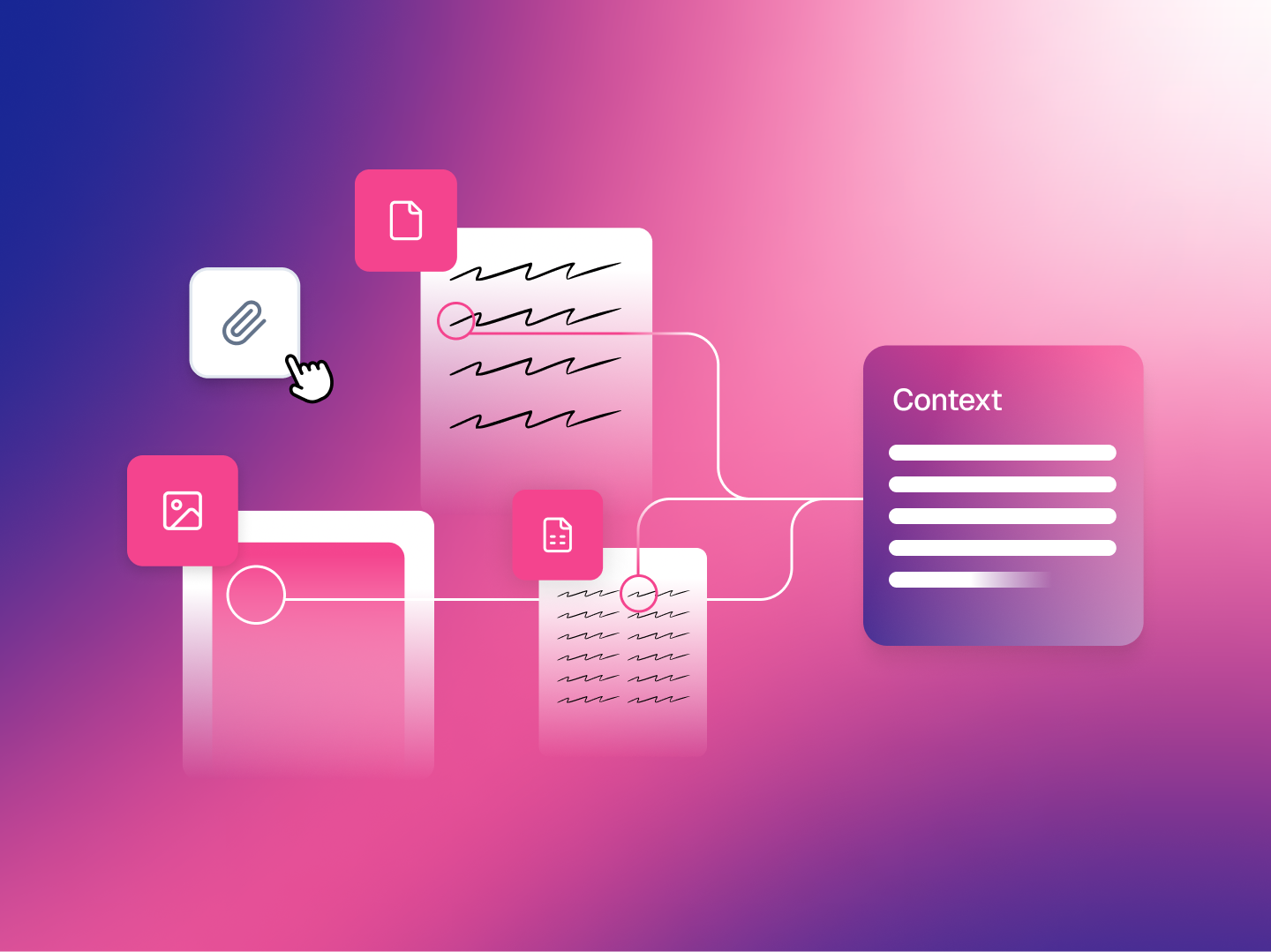
Since adding the ability to attach files to Context, Heidi has processed tens of thousands of PDFs, .doc files, and images.
While our testing shows a >99% success rate, we’re aware of occasional instances where Heidi struggles to interpret an image of handwritten notes or a complex PDF (such as a PDF with redacted text or a combination of images and text).
We’ve gone back to the drawing board - Heidi can now parse handwriting and complex PDFs, accurately extracting data from even the messiest of uploads.
Section Name: BlockImage
Snippets in Context
Clinicians who regularly utilize Snippets in notes and documents will be pleased to know this feature is now enabled in Context.
Simply enter the shorthand cue/trigger for your Snippet in the Context tab and your pre-saved block of text appears.
Section Name: BlockImage
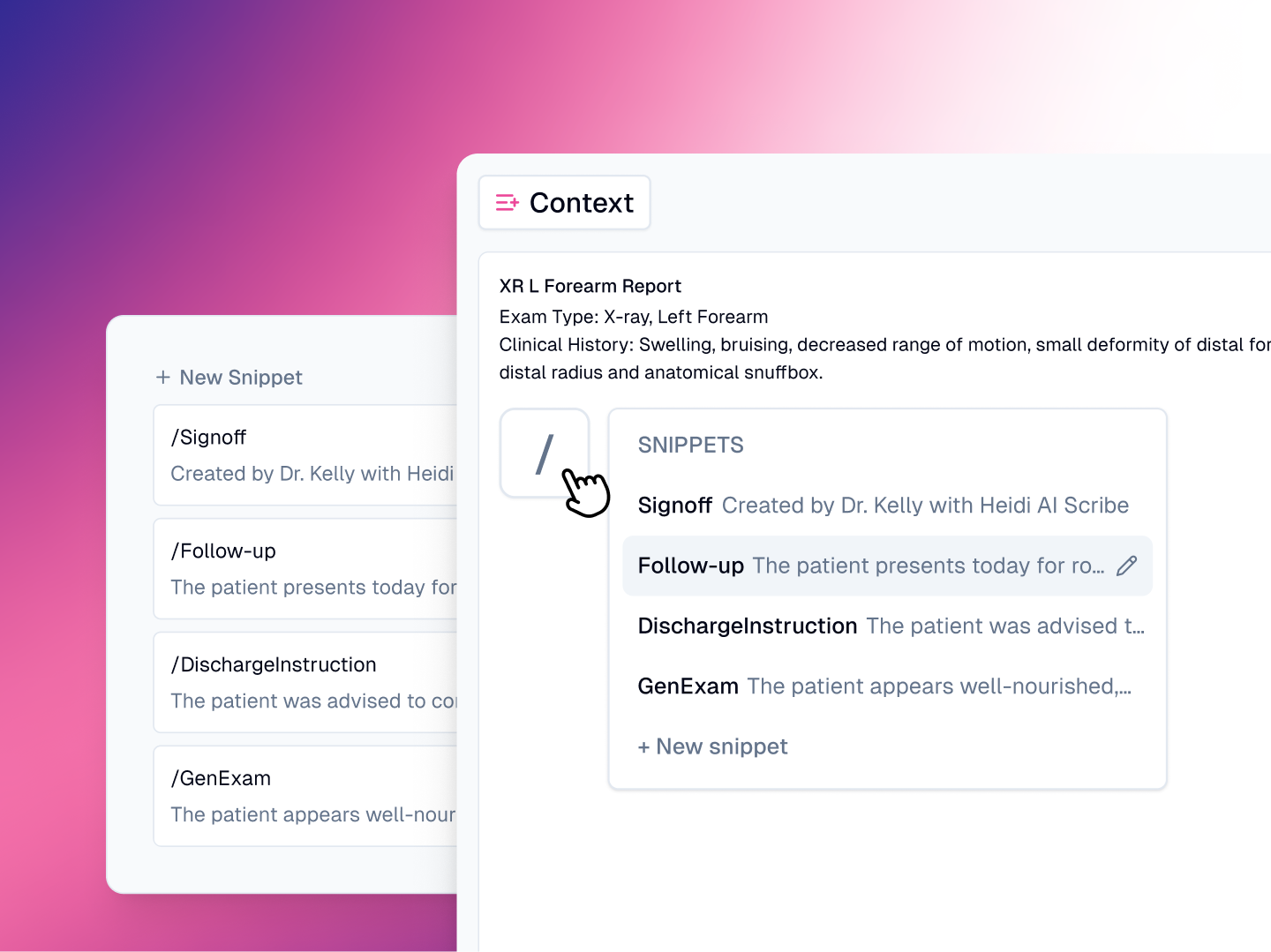
Snippets in Context is great for situations where it’s faster to manually enter information compared to attaching a document, such as:
- Acknowledging a test or investigation where no abnormalities were detected
- Quickly adding background information that you’ve committed to memory
- Giving Heidi context about the scope of practice or visit type
- Including common referral centre information
Papercuts
Improvements
- Added a backup transcriber to reduce transcription errors
- Upgraded LLM
- Audited the functionality of all Shortcuts and fixed any unexpected behavior
- Improved UI/UX when being invited to a team
- Added a toggleable Consent popup for the Widget
- Updated the ‘Start this session using the header’ image to make it more intuitive for users
- Implemented a new text editor to expand future functionality
Fixes
- Fixed a bug causing the edit button to become inaccessible in the template editor
- Fixed an early technical decision that prevented users from different countries but from the same region joining the same team
- Fixed a visual bug when selecting all sessions in session sidebar
- Resolved an issue occasionally making longer tab titles overlap adjoining tabs
- Solved a problem resulting in some session tabs to get stuck in loading state


